Reliable data is prepared before fieldwork
A poorly prepared survey costs twice: once for the collection, and again to redo it. Here are the practices we apply on every assignment to obtain usable data on the first visit.
1. Design the questionnaire for the field
Short questions, closed choices where possible, built-in consistency checks (an area cannot be negative, an age must be plausible). Every question must serve a specific indicator.
2. Test before rolling out
A pilot test with a few households reveals misunderstood questions, ambiguous translations and the real length of an interview. It is better to correct before a thousand forms than after.
3. Train field agents properly
Good training combines theory, role play and field exercises. Field agents must master the app, but also interviewing technique and obtaining respondents’ consent.
4. Take care of GPS accuracy
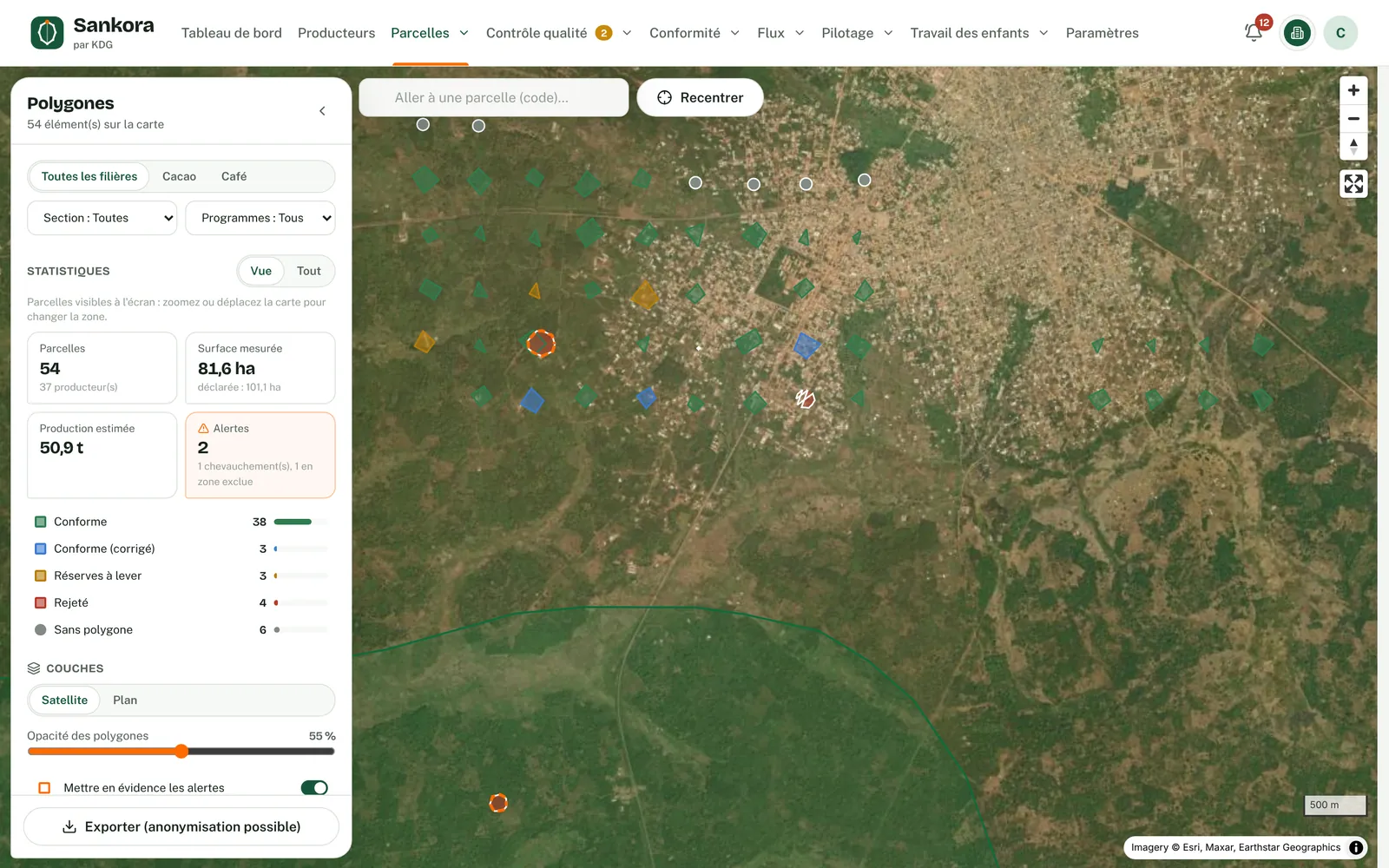
Wait until the displayed accuracy is sufficient before recording a point, walk the full boundary of the plot for a polygon, and automatically reject readings that are too imprecise.
5. Check quality every day
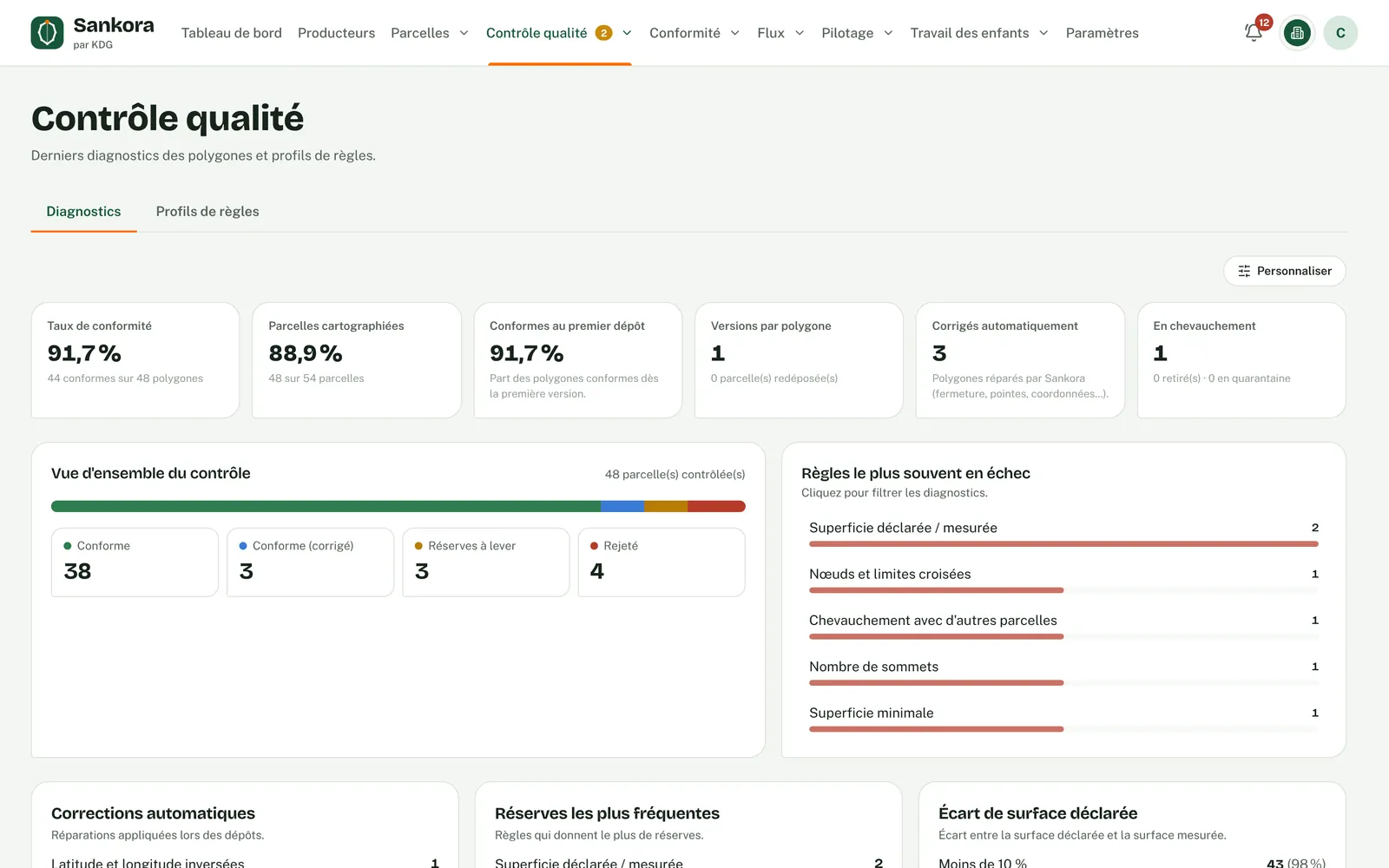
A supervisor checks the synced data daily: duplicates, abnormal interview durations, outliers, overlapping polygons. Errors are corrected while the teams are still on site.
6. Plan synchronisation
Schedule regular sync points, keep several days of autonomy on the phones and back up the data to the server as soon as possible.
7. Protect personal data
Obtain consent, restrict access by role, encrypt sensitive data and comply with Ivorian Law No. 2013-450 on the protection of personal data. It is a legal obligation and a condition for communities’ trust.
Need a team for your next data collection?
We design the tools, recruit and train the enumerators, supervise the collection and deliver clean, analysed data. See our field data collection service.
Free assessment: a 45-minute conversation with a Kaada Group expert, by video call or in Abidjan.