Up to date as of 11 October 2026. This article is general information, not legal advice.
Rules that apply to buyers, data that comes from you
Several European rules require companies that buy, import or sell in the Union to know their supply chains. These rules do not apply directly to African cooperatives or exporters. But the companies subject to them can only comply with information from their suppliers. That is why requests for data reach you.
Here are the main ones, with their dates as known on 11 October 2026.
The EUDR: the timeline
The EU Deforestation Regulation (EUDR) applies:
- from 30 December 2026 to large and medium-sized operators;
- from 30 June 2027 to micro and small operators, except those already covered by the EU Timber Regulation, which are subject to it from 30 December 2026.
Products must be “deforestation-free” and produced in accordance with the relevant legislation of the country of production. They must also be covered by a due diligence statement, submitted to the EU information system. Some products added to the list in 2026, including instant coffee, are covered from 30 December 2027. Our EUDR guide details these obligations.
Due diligence for large companies (CSDDD)
The EU Corporate Sustainability Due Diligence Directive (CSDDD) was amended by Directive (EU) 2026/470, published in the Official Journal on 26 February 2026. According to the European Commission:
- it covers EU companies with at least 5,000 employees and €1.5 billion in net worldwide turnover, and non-EU companies with at least €1.5 billion in net turnover in the EU;
- Member States must transpose it by 26 July 2028 at the latest and apply it from 26 July 2029;
- these companies must identify and address actual or potential adverse impacts on human rights and the environment in their own operations, those of their subsidiaries and their “chain of activities”;
- they must have a complaints procedure, monitor their measures and report on them publicly;
- since the 2026 amendment, they can focus their efforts on the areas where adverse impacts are most likely and most severe.
The ban on products made with forced labour
Regulation (EU) 2024/3015 prohibits placing or making available on the EU market, or exporting from it, any product made with forced labour. It applies from 14 December 2027. According to the summary published on EUR-Lex:
- it covers all products, whatever their sector or origin;
- it also applies when forced labour is involved in only one stage of production, including harvesting;
- during an investigation, the authorities can ask companies to describe their due diligence, prevention and remediation measures.
The Commission provides guidelines and a database on risk areas and products.
Sustainability reporting (CSRD)
The EU Corporate Sustainability Reporting Directive (CSRD) requires certain large companies to report on their impacts, including in their value chain. Its scope was reduced in 2025 and 2026 by the so-called “Omnibus” texts. For suppliers, two points matter:
- the rules aim to ensure that large companies’ obligations do not weigh on the smaller companies in their value chain (the “value chain cap”);
- a voluntary reporting standard exists for small and medium-sized enterprises (VSME). It can serve as a basis for responding to buyers’ requests.
Certification standards
Independently of the law, many buyers rely on certification standards. Each has its own requirements for traceability, farming practices, working conditions and auditing. The data requested largely overlaps with that of the rules above: producer registry, plots, purchases, premiums, social monitoring.
What this means for you
Your buyers’ requests may cover four types of information:
- origin: who produced it, on which plot, in which lot;
- environment: no deforestation, farming practices;
- social issues: child labour, forced labour, working conditions, income, grievance procedure;
- proof: documents, dates, authors, history of corrections.
An organisation that already keeps a reliable registry, links its purchases to its producers and documents its social actions can respond to several rules with the same data.
Protection for small suppliers
The CSDDD provides support and protection measures for SMEs and other small business partners of the companies concerned, including limits on information requests and model contract clauses. These measures do not exempt you from responding to your buyers. They provide a framework for these requests.
How Kaada Group supports you
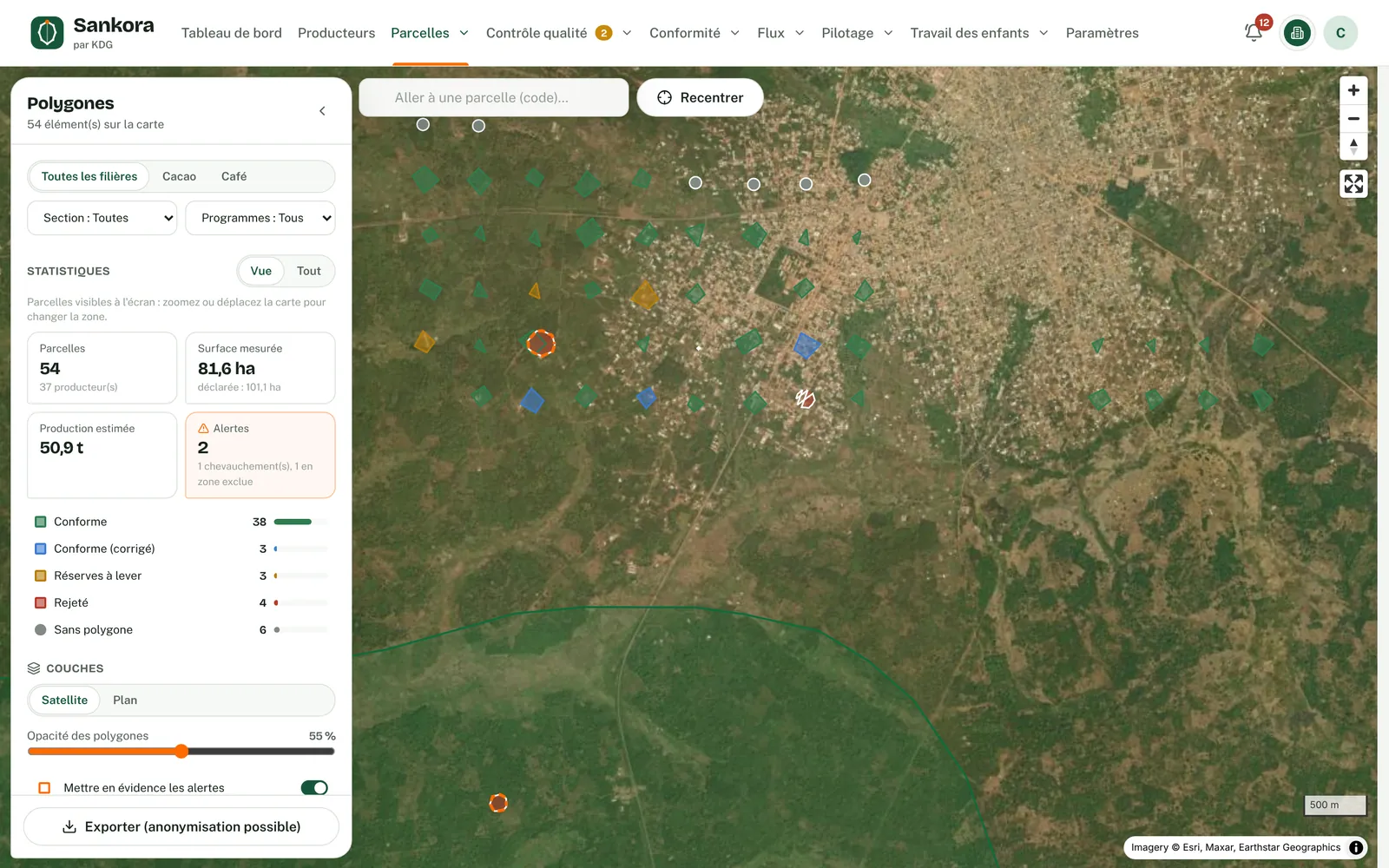
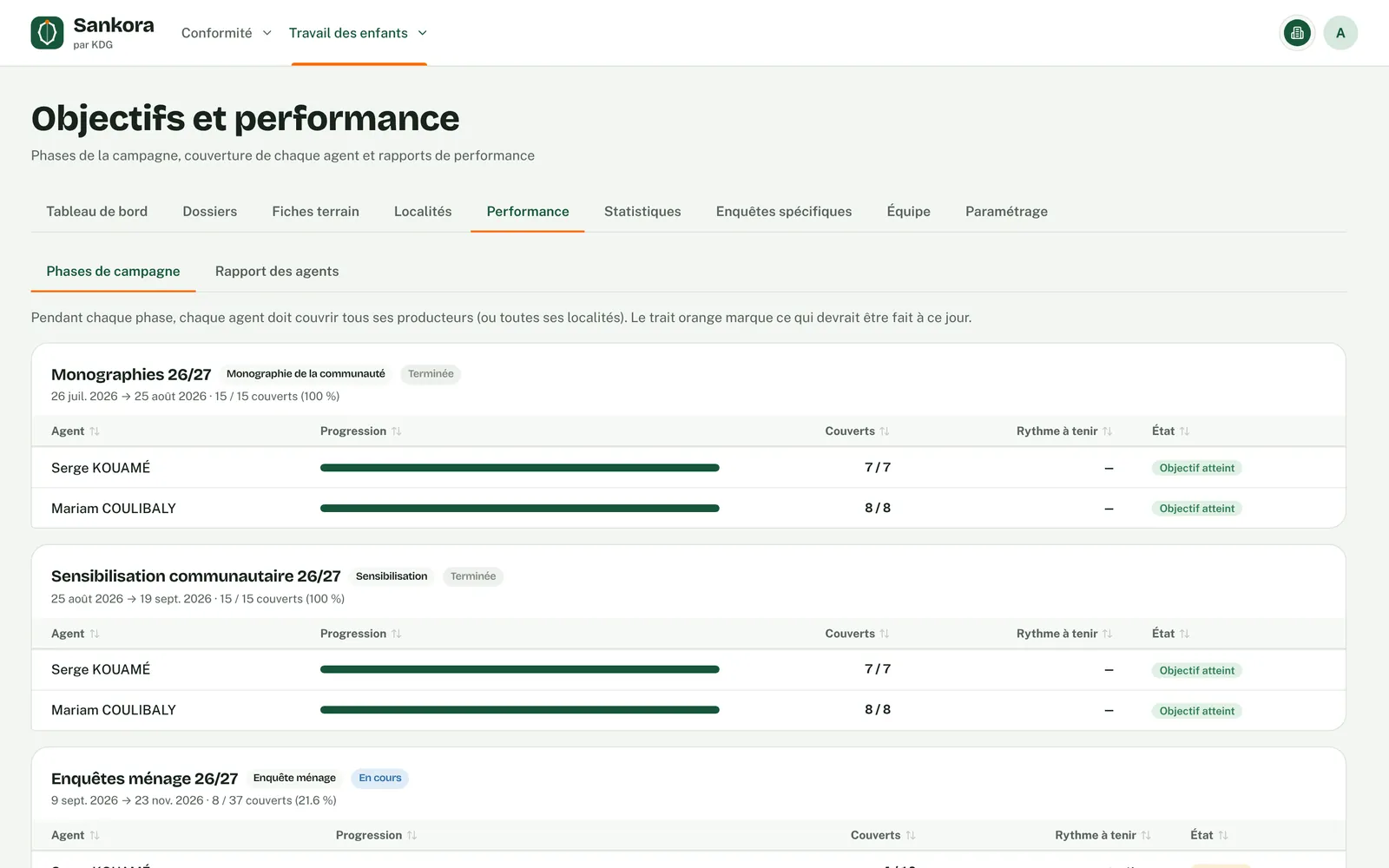
We design the tools and organise the data collection that make it possible to respond to these requests: producer registry, mapping, lot traceability, social monitoring, reports for buyers and auditors. Buyer requirements.
Sources
Reference sources, as of 11 October 2026.
- European Commission, EUDR page
- European Commission, Green Forum, EUDR implementation
- Regulation (EU) 2023/1115 (EUDR), EUR-Lex
- European Commission, corporate sustainability due diligence (CSDDD)
- European Commission, corporate sustainability reporting (CSRD)
- European Commission, forced labour regulation
- EUR-Lex, summary of Regulation (EU) 2024/3015
- Directive (EU) 2026/470 (“Omnibus I”), Official Journal of 26 February 2026
Up to date as of 11 October 2026. These texts change: refer to the texts published in the Official Journal of the EU (EUR-Lex) and to the European Commission’s pages. This article is general information, not legal advice.
Free assessment: a 45-minute conversation with a Kaada Group expert, by video call or in Abidjan.